Description
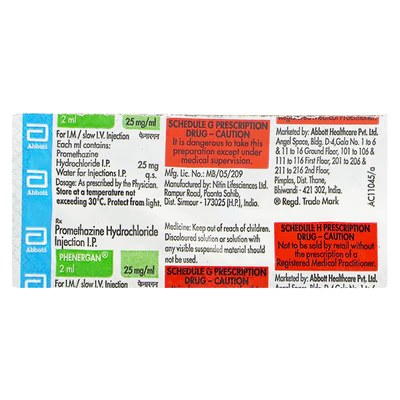
Phenergan Injection 2ml contains promethazine, an antihistamine-based injectable formulation that is used in clinical practice under strict medical supervision. It is generally administered in hospital or healthcare settings where injectable forms are required for structured symptom support. This medicine is not meant for self-use and is only given by trained healthcare professionals in controlled environments.
This injection is commonly considered in situations involving nausea, vomiting, allergy-related symptoms, motion-related discomfort, or sedation-related clinical support needs. It is typically used when oral medicines are not suitable or when faster clinical response is required under medical evaluation. The decision to use this formulation is based on patient condition, symptom severity, and overall clinical assessment by a healthcare provider.
Phenergan Injection 2ml works as part of the antihistamine class, where promethazine interacts with histamine-related pathways and also influences central nervous system responses. This combined pharmacological activity helps provide structured symptom support in controlled medical care environments. It is usually administered either intramuscularly or intravenously by healthcare professionals depending on clinical requirements and hospital protocols.
This injection is suitable for patients who require supervised injectable antihistamine support in clinical settings. It should be used with caution in individuals with certain medical conditions, and a full medical history review is recommended before administration. During pregnancy and breastfeeding, it is only considered if clearly advised by a healthcare professional after evaluating the risk–benefit balance. Self-administration is not recommended under any circumstances.
Common responses after administration may include drowsiness, dizziness, fatigue, or mild injection site reactions in some individuals. These effects are generally temporary and vary based on individual sensitivity and clinical condition. Continuous monitoring in healthcare settings helps ensure appropriate response and safe administration. Regular medical supervision and adherence to clinical guidance are important for appropriate use of this injectable formulation.
Uses Of PHENERGAN
It is used to manage:
• Allergic reactions (itching, hives, angioedema)
• Severe allergic reactions (as an adjunct in anaphylaxis)
• Allergic reactions to blood or plasma transfusion
• Motion sickness
• Nausea and vomiting (including drug-induced and post-operative)
• reduction of nausea and vomiting associated with anaesthesia and surgery
• Sedation and anxiety relief
• Pre-operative, post-operative, and obstetric (labour) sedation
• Post-operative pain (as an adjunct to analgesics)
• As an adjunct to anaesthesia in special surgical procedures
Benefits of PHENERGAN
Support for Nausea and Vomiting–Related Discomfort
Phenergan Injection 2ml may be used to support relief from nausea and vomiting–related discomfort. It helps manage multiple uneasiness sensations that can occur in clinical care environments. It is generally used under healthcare supervision for short-term symptom support.
Benefits of Antihistamine-Based Injectable Formulations
Antihistamine injectable formulations offer support by acting on histamine-related responses in the body. They provide broader symptom support compared to some single-action approaches. Such formulations are commonly used under professional medical guidance in clinical environments.
Use of Phenergan Injection 2ml for Nausea-Related Discomfort
Phenergan Injection 2ml may help support individuals experiencing nausea-related discomfort in clinical care settings. It assists in managing uneasiness that may affect physical comfort and stability. It is generally used in monitored healthcare situations.
Support in Motion Sickness–Related Discomfort
This injection may be used to support relief from motion sickness–related discomfort. It helps manage travel-associated uneasiness and imbalance sensations. It is administered under medical supervision when clinically considered appropriate.
Support in Controlled Clinical Symptom Environments
Phenergan Injection 2ml is used in controlled healthcare environments where symptom-based support is required. It helps manage multiple discomfort sensations under monitored conditions. It is administered as part of clinical decision-making by healthcare professionals.
How PHENERGAN Works
How Promethazine Interacts with Histamine H1 Receptors
Promethazine works by interacting with histamine H1 receptors in the body, helping regulate histamine-related responses in a controlled physiological way. This interaction is part of its antihistamine classification used in clinical pharmacology explanations.
Antihistamine Receptor Blocking Action Explained
Promethazine is known for its ability to block histamine H1 receptor activity at a cellular level. This receptor-level interaction is a key concept in understanding how antihistamine compounds function within the body.
Central Nervous System Activity of Promethazine
Promethazine also shows activity in the central nervous system, where it interacts with neural pathways involved in alertness and sensory response. This contributes to its overall pharmacological profile in medical science.
Sedating Antihistamine Mechanism in Pharmacology
In pharmacological terms, promethazine is categorized as a sedating antihistamine due to its action on both histamine receptors and central nervous system pathways. This dual interaction is widely described in medical reference texts.
Receptor-Level Activity of Phenergan Injection
At the receptor level, Phenergan Injection 2ml demonstrates binding interactions that influence histamine signaling. This receptor-based activity forms the foundation of its pharmacological classification.
How to use PHENERGAN
Recommended Dosage Guidelines for Phenergan Injection 2ml
- Dosage is determined in clinical settings based on individual assessment
- Administered only under healthcare supervision
- Adjustments are made according to patient-specific clinical evaluation
- Used as part of structured medical care protocols in hospitals
Intramuscular Administration Method Explained
- Given as an injection into muscle tissue by healthcare professionals
- Commonly used in controlled clinical environments
- Requires sterile handling and proper injection technique
- Performed only in healthcare settings
Intravenous Administration Process in Clinical Settings
- Administered directly into a vein under supervision
- Conducted in monitored healthcare environments
- Requires controlled infusion or slow administration as per clinical standards
- Handled only by trained medical personnel
Dosage Considerations in Clinical Practice
- Based on individual health evaluation
- Depends on clinical condition and response factors
- Determined only by qualified healthcare professionals
- Adjusted according to standard medical protocols
Step-by-Step Injection Administration Overview
- Patient evaluation is performed by healthcare professional
- Appropriate route (intramuscular or intravenous) is selected
- Injection is prepared under sterile conditions
- Administration is carried out using clinical technique
- Post-administration observation may be conducted in healthcare settings
Side Effects Of PHENERGAN
Common side effects include:
• Drowsiness (sedation)
• Dizziness
• Blurred or double vision
• Confusion or disorientation
• Dry mouth
• Fatigue or weakness
• Nausea or vomiting
• Constipation or diarrhoea
• Loss of appetite
• Injection site reactions (pain, swelling)
• Low blood pressure (hypotension) or faintness
• Increased or irregular heart rate (tachycardia/bradycardia
When to Consult Your Doctor:
• Severe allergic reaction (wheezing, difficulty breathing, swelling of face/lips/tongue)
Warning & Precautions

Pregnancy
Phenergan Injection should be used during pregnancy only if clearly needed. High doses in late pregnancy may cause movement disorders (extrapyramidal symptoms) in the newborn. Limited human data are available, so the potential benefits must outweigh risks. Always consult your doctor before use.

Breastfeeding
Phenergan Injection is not recommended during breastfeeding unless clearly prescribed by your doctor. It may pass into breast milk in small amounts. Although serious harmful effects are uncommon, caution is advised. Infants should be monitored for side effects such as excessive sleepiness or sedation. Always consult your doctor before using this medicine.

Driving and Using Machines
Use with Caution
Phenergan Injection may cause marked drowsiness and impair mental and physical abilities. Avoid driving or operating machinery until you know how the medicine affects you.

Alcohol
Alcohol should be avoided while taking Phenergan Injection, as it can significantly increase sedation and CNS depression. This may lead to severe drowsiness or impaired coordination.

Kidney
Use with Caution
No specific data available, but caution is advised in patients with impaired organ function. Consult your doctor before use.

Liver
Use with Caution
Phenergan Injection should be used with caution in patients with liver impairment or jaundice. Concomitant use with other hepatotoxic medicines may increase the risk of liver damage. Regular monitoring may be required. Always consult your doctor before taking this medicine.

Allergy
Contraindicated
Phenergan Injection contains sodium metabisulfite, which may cause allergic reactions, including severe reactions (anaphylaxis) and asthma attacks in susceptible individuals. Seek immediate medical help if symptoms occur.

Lungs
Contraindicated
Phenergan Injection is not recommended in patients with compromised respiratory function (e.g., COPD, sleep apnea).

Heart Disease
Phenergan Injection should be used with caution in patients with cardiovascular disorders. It is not recommended without medical supervision as it may cause hypotension and QT interval prolongation, increasing the risk of serious heart rhythm disturbances. Always consult your doctor before taking this medicine.

Use In Pediatrics
Phenergan Injection is contraindicated in children under 2 years of age due to the risk of fatal respiratory depression. Use with caution in children aged 2 years and above. It may cause serious adverse effects such as hallucinations, seizures, or, in rare cases, sudden death at high doses. Avoid use in children with suspected Reye’s syndrome or liver disease. Always consult your doctor before taking this medicine.

Use In Geriatrics
Elderly patients may be more sensitive to sedative effects. Lower doses are recommended with careful monitoring.
Other Warnings for PHENERGAN
Before Taking This Medicine, Inform Your Doctor If You Have:
- Epilepsy or seizure disorders
- Bone marrow disorders
- Glaucoma
- Prostate enlargement
- Gastrointestinal obstruction
- History of severe allergic reactions

1 review for Phenergan Injection 2ml
There are no reviews yet.